
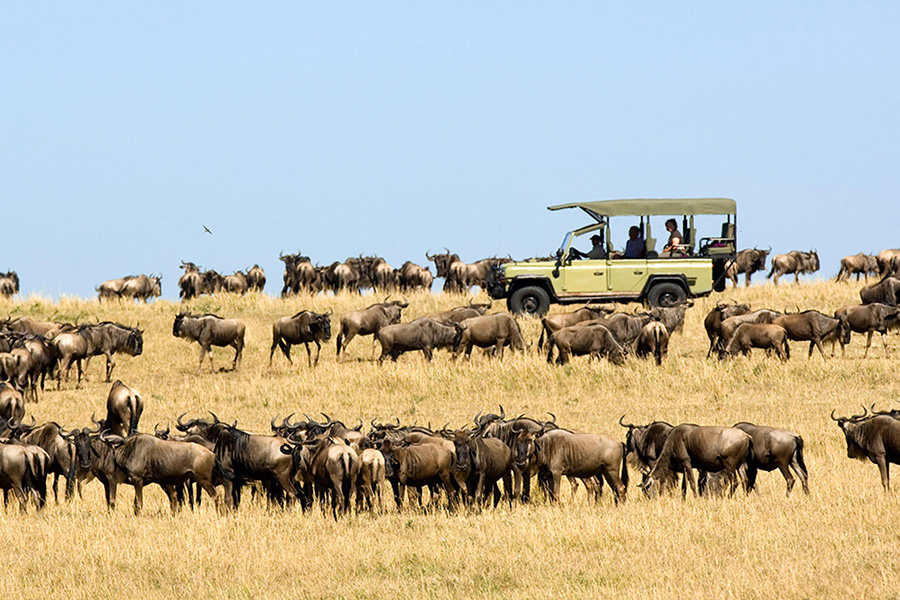
There are few experiences on Earth that command both scale and intensity like a Wildebeest Migration Safari, widely regarded as one of the greatest natural wonders of the world, where nature operates with unapologetic force and precision across the ecosystems of Kenya and Tanzania. In a continuous, instinct-driven cycle, vast herds move across the Serengeti and into the Maasai Mara, creating a living, breathing system of survival, risk, and renewal. This is not simply wildlife viewing — it is a dynamic interaction between predator and prey, landscape and climate, timing and instinct. Every stage of the journey reveals a different dimension of Africa’s wilderness, from dramatic river crossings to the quiet tension of open plains. For travelers seeking depth, authenticity, and a rare front-row perspective into one of the world’s most extraordinary natural phenomena, a Wildebeest Migration Safari stands in a category of its own.
What Is a Wildebeest Migration Safari?
Building on the awe-inspiring spectacle of the migration, a Wildebeest Migration Safari is much more than a typical wildlife tour. It is a journey that brings travelers up close to over a million wildebeests, along with zebras and gazelles, as they move across Tanzania’s Serengeti into Kenya’s Maasai Mara. Unlike ordinary game drives, this safari is timed to the migration’s rhythms, giving visitors the chance to witness dramatic river crossings, predator-prey interactions, and the sweeping plains alive with movement.
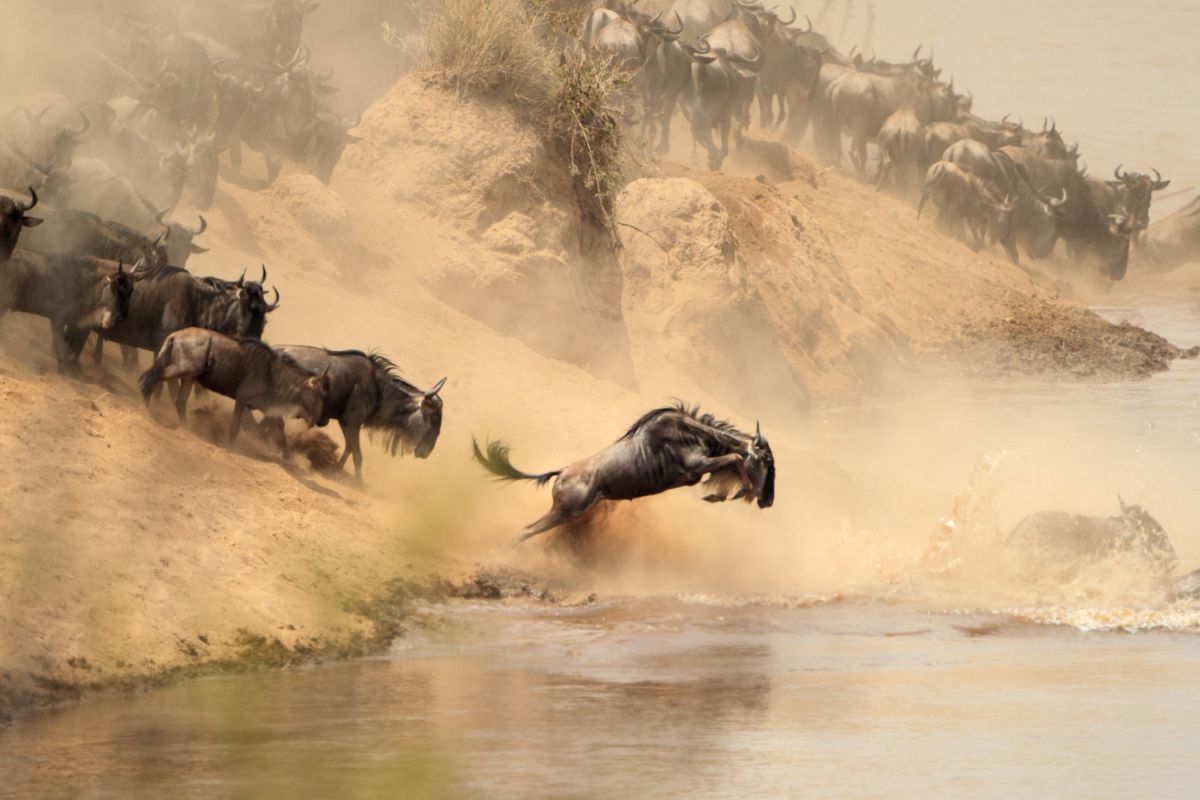
At the heart of the experience is a balance of adventure and insight: knowledgeable guides explain the migration patterns, animal behavior, and the ecosystems that sustain them. Each day is planned to maximize wildlife encounters, photography opportunities, and unforgettable moments in one of the world’s most iconic natural events. A Wildebeest Migration Safari is, ultimately, a rare opportunity to witness Africa’s wilderness in its most powerful and dynamic form while exploring Kenya and Tanzania in comfort and style.
Best Time for a Wildebeest Migration Safari
Timing is everything on a Wildebeest Migration Safari, as the movement of the herds follows seasonal patterns influenced by rainfall, grass availability, and river levels across Tanzania and Kenya. While the wildebeest are present year-round, understanding the migration’s rhythm allows travelers to plan for the most dramatic encounters, from massive river crossings to predator-filled plains.
Month-by-Month Breakdown
January – March
- Location: Southern Serengeti, Tanzania
- What to Expect: Calving season, where thousands of newborn wildebeests arrive, attracting predators and creating high-energy wildlife interactions.
- Why It Matters: These months are perfect for witnessing the raw survival instincts of nature up close, though river crossings are limited. Rainfall can be patchy, so some roads may be slippery.
April – May
- Location: Central Serengeti moving north
- What to Expect: Short rains create lush green landscapes, fewer tourists, and calmer wildlife encounters.
- Why It Matters: While river crossings are rare, the verdant scenery and abundant birdlife make for excellent photography. Travel logistics may require vehicles equipped for wet conditions.
June – July
- Location: Northern Serengeti and approaching Maasai Mara, Kenya
- What to Expect: The wildebeests begin their trek northward. Mara River crossings often start in late June, offering iconic, adrenaline-filled scenes.
- Why It Matters: This is considered one of the peak periods for a Wildebeest Migration Safari, combining both the excitement of crossings and favorable dry-season travel conditions.
August – September
- Location: Northern Serengeti into Maasai Mara, Kenya
- What to Expect: River crossings continue; predators are highly active, and plains are dry, making animals easier to spot.
- Why It Matters: These months provide a classic, high-visibility safari experience with breathtaking photography opportunities.
October – November
- Location: Maasai Mara, Kenya
- What to Expect: The herds begin their southward movement back into Tanzania. Wildlife is dense, and predators are still active.
- Why It Matters: Travel remains comfortable, though sporadic rains can start in November, adding drama to landscapes and wildlife behavior.
December
- Location: Central Serengeti, Tanzania
- What to Expect: The migration returns to the southern plains, preparing for the calving season.
- Why It Matters: December offers quieter parks and lush scenery, ideal for those who prefer a less crowded, scenic safari experience.
Why Timing is Strategic
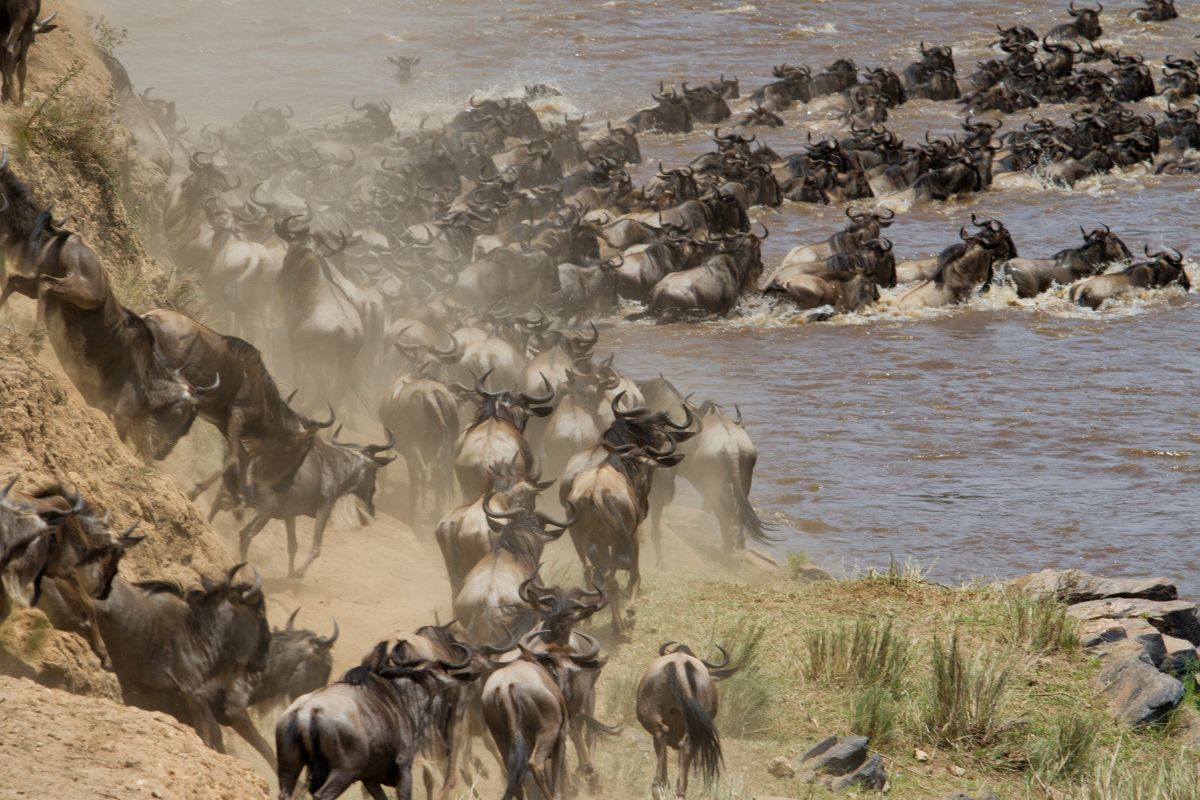
The Wildebeest Migration Safari is dynamic, and river crossings, the most dramatic highlight, depend on rainfall, water levels, and predator activity. Unpredictable rains can shift these timings, meaning flexibility and local insight are important. By aligning travel with seasonal migration patterns, visitors maximize their chances of witnessing epic wildlife moments, whether it’s newborn calves, predator hunts, or iconic Mara River crossings.
Best Places to Experience the Wildebeest Migration in Kenya and Tanzania
Now that you understand the best time for a Wildebeest Migration Safari, the next step is knowing exactly where to be for the most rewarding sightings. Since the migration follows a circular route between Tanzania and Kenya, the best viewing locations change throughout the year. Choosing the right destination at the right time can make the difference between seeing open grazing herds and witnessing dramatic river crossings.
1. Southern Serengeti, Tanzania
The Southern Serengeti is one of the most important stages of the migration, especially from January to March. This is where the famous calving season takes place, with thousands of wildebeest calves born daily across the Ndutu plains.
Why it stands out:
- best for calving season
- high predator activity
- exceptional photography opportunities
- vast open plains
This area is ideal for travelers who want to witness the beginning of the migration cycle and dramatic predator-prey interactions.
2. Central Serengeti, Tanzania
From April to June, the herds begin moving through the Central Serengeti, creating dense concentrations of wildlife across the endless plains.
Why it stands out:
- year-round wildlife sightings
- excellent game drives
- ideal transition zone during migration movement
- luxury safari camps available
Moreover, this region offers excellent chances to see lions, cheetahs, and leopards following the herds.
3. Northern Serengeti, Tanzania
Without question, the Northern Serengeti is one of the most sought-after places during a Wildebeest Migration Safari, particularly from June to August.
This is where the famous Mara River crossings begin.
Why it stands out:
- dramatic river crossings
- crocodile encounters
- intense predator action
- fewer crowds compared to Maasai Mara
For many travelers, this is the most thrilling part of the migration.
4. Maasai Mara, Kenya
As the herds move north, they enter Kenya’s Maasai Mara, usually from July to October.
This is one of the most iconic locations to experience the migration.
Why it stands out:
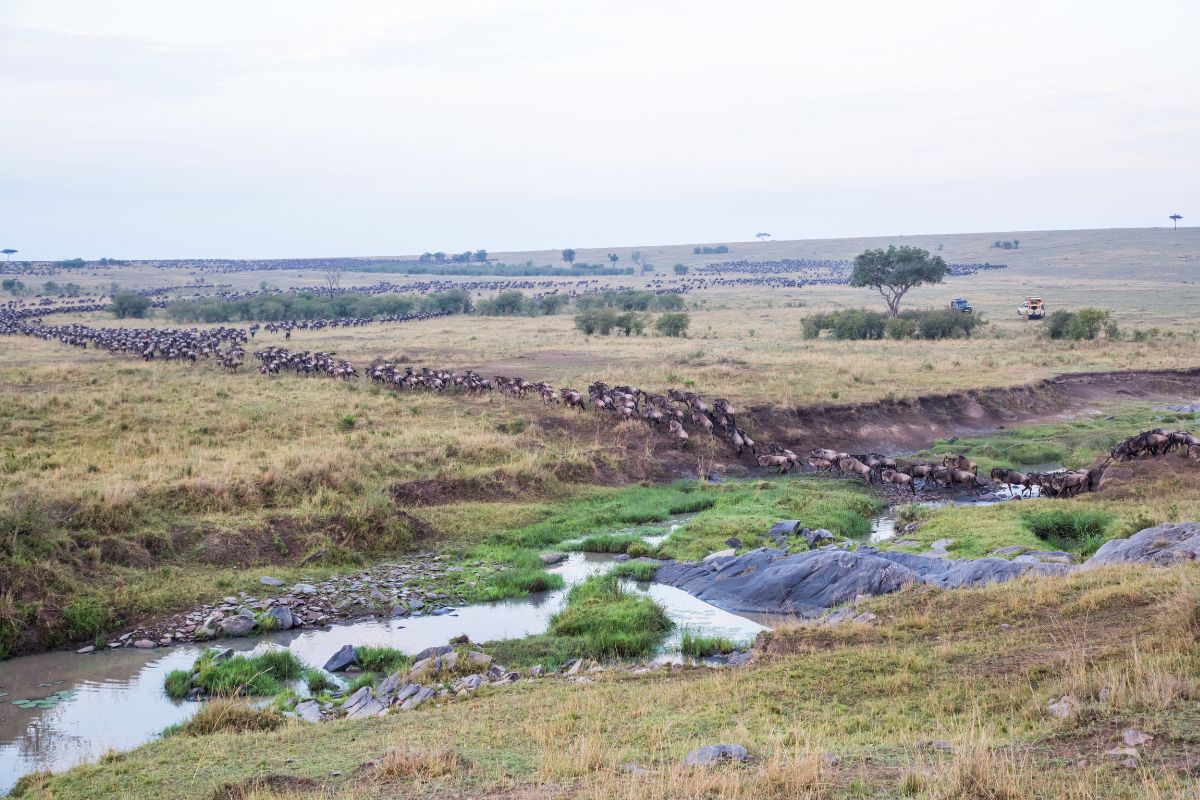
- world-famous Mara River crossings
- exceptional big cat sightings
- open grasslands for easy viewing
- classic luxury safari experience
The Maasai Mara offers some of the most cinematic safari moments in Africa.
5. Western Corridor, Serengeti
Another excellent yet often overlooked location is the Western Corridor.
This region becomes highly active around May to July, especially near the Grumeti River.
Why it stands out:
- early river crossings
- fewer tourists
- rich wildlife diversity
- ideal for exclusive safaris
This is perfect for travelers seeking a quieter but equally rewarding migration experience.
Ultimately, the best place depends on the exact month of travel and the type of experience you want — whether it is calving, predator action, or river crossings. By aligning the destination with the migration calendar, your Wildebeest Migration Safari becomes significantly more rewarding and memorable.
What Wildlife Can You Expect on a Wildebeest Migration Safari?
Having explored where to position yourself for the best sightings, the next question naturally becomes what you are likely to encounter during a Wildebeest Migration Safari. While the migration is centered around wildebeests, the reality is far more dynamic — it is a complete ecosystem in motion, attracting a wide range of predators, herbivores, and birdlife across Kenya and Tanzania.
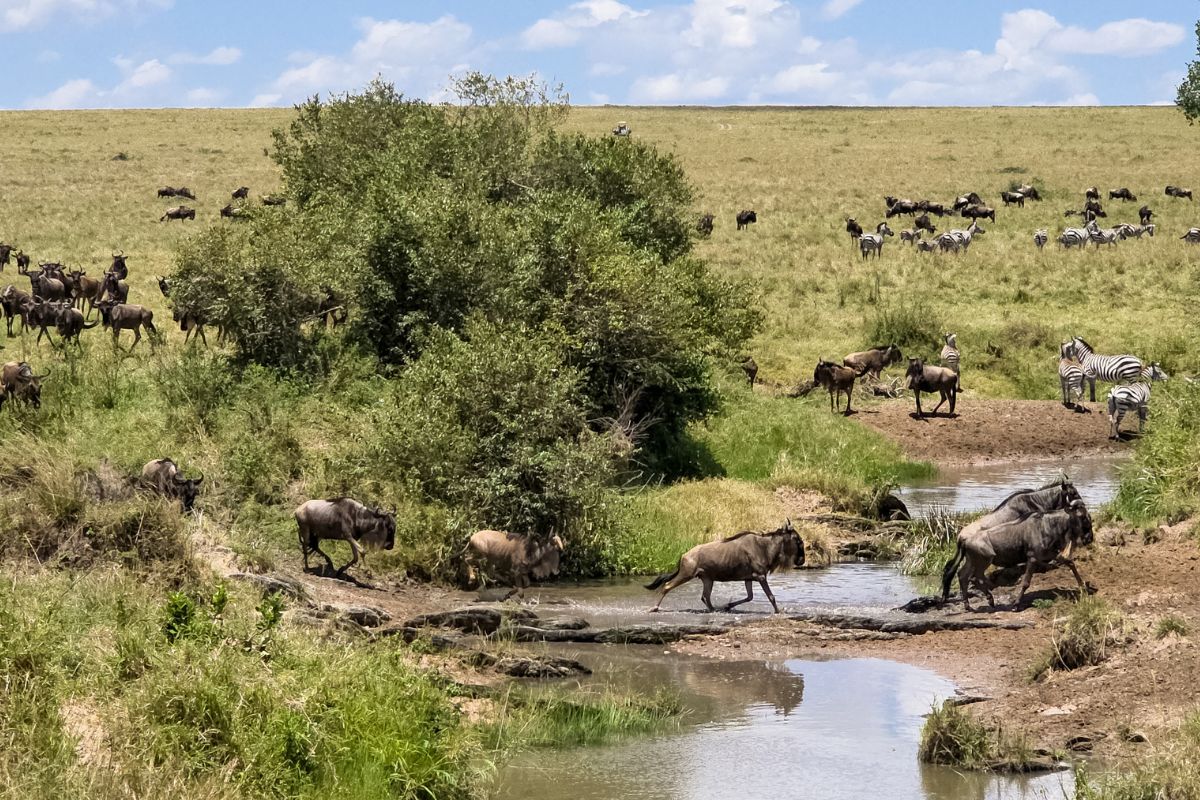
1. Wildebeests – The Core of the Migration
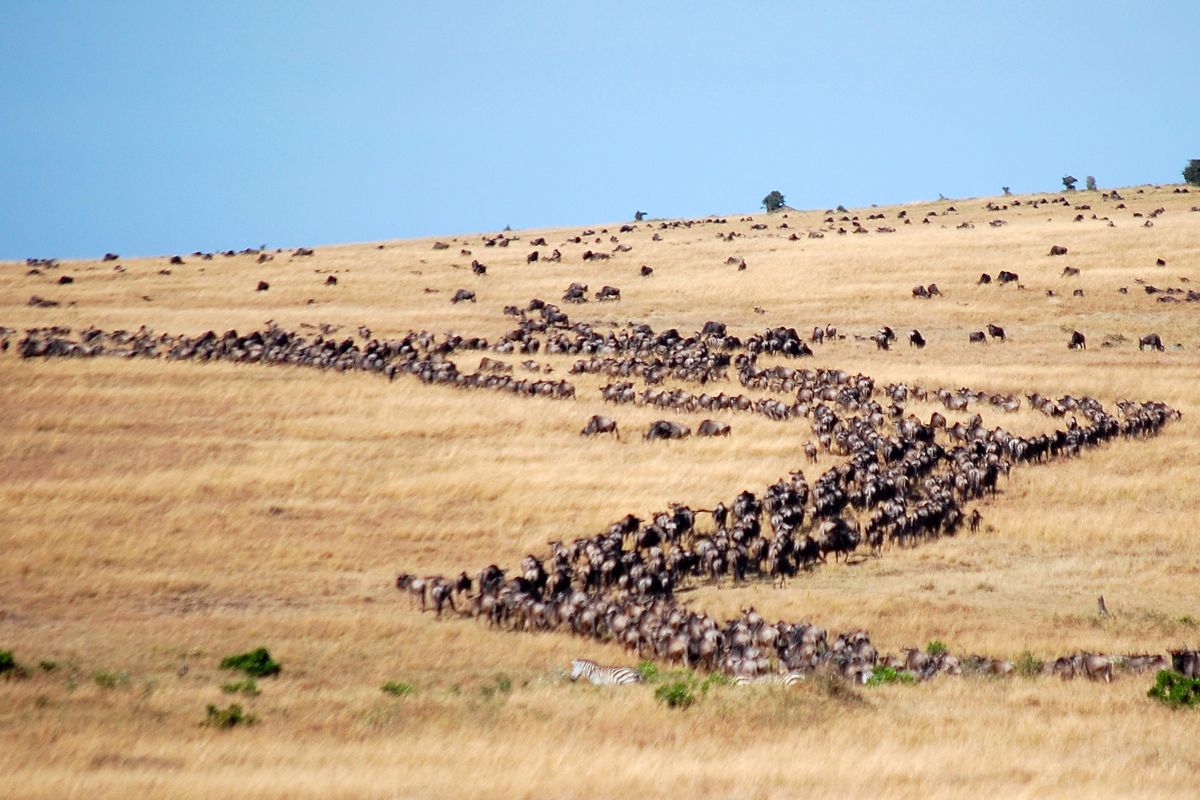
At the heart of every Wildebeest Migration Safari are over a million wildebeests moving in synchronized patterns across the plains.
What makes them remarkable:
- massive herd formations stretching across the horizon
- instinct-driven movement guided by rainfall
- dramatic river crossings filled with tension
- calving season with thousands of newborns
2. Zebras and Gazelles – The Migration Companions
Moving alongside the wildebeests are large herds of zebras and gazelles, creating a balanced and efficient grazing system.
Why they are important:
- zebras graze first, preparing grass for wildebeests
- gazelles follow, feeding on shorter grass
- they increase herd size and visibility
- they attract predators, adding to the action
3. Predators – The Defining Drama
A Wildebeest Migration Safari is known for its intense predator-prey encounters.
Common predators include:
- lions
- cheetahs
- leopards
- hyenas
- African wild dogs
Why this matters:
- predator activity peaks during calving season
- migration routes attract high predator density
- every movement of the herd creates tension
4. Crocodiles and River Predators
River crossings introduce one of the most dramatic elements of the migration.
What to expect:
- Nile crocodiles waiting at crossing points
- chaotic herd movement in rivers
- high-risk survival moments
- iconic safari photography opportunities
5. Large Herbivores Beyond the Migration
The ecosystem supports a wide variety of other large mammals.
Other wildlife you may see:
- elephants
- giraffes
- buffalo
- elands
- topis
These species enrich the safari beyond the migration itself.
6. Birdlife – The Hidden Highlight
Often overlooked, birdlife adds another layer to the safari experience.
Common sightings include:
- vultures circling predator zones
- eagles and hawks
- storks and herons
- seasonal migratory birds
Ultimately, a Wildebeest Migration Safari is not just about one species — it is about witnessing a complete ecosystem in motion. From vast grazing herds to predator encounters and river crossings, every moment delivers a different perspective of Africa’s wilderness.
How Many Days Do You Need for a Wildebeest Migration Safari?
Now that you know where to go and what wildlife to expect, the next important question is how much time you should set aside for a truly rewarding Wildebeest Migration Safari. While it is possible to experience the migration in a few days, the ideal length depends on your travel goals, budget, and the specific migration stage you want to witness. Because the herds are constantly moving across Kenya and Tanzania, giving yourself enough time significantly increases your chances of seeing the most dramatic moments.
1. 3–4 Days – Ideal for a Short Safari Escape
A 3 to 4-day Wildebeest Migration Safari is perfect for travelers who are short on time but still want to experience the magic of the migration.
Best for:
- quick luxury getaways
- first-time safari travelers
- focused visits to one location
- witnessing calving season or localized herd movement
This option works best when the herds are concentrated in one area, such as the Southern Serengeti during calving season or the Maasai Mara during peak crossings.
2. 5–7 Days – The Most Recommended Option
For most travelers, 5 to 7 days offers the perfect balance between experience and flexibility.
Why this is ideal:
- enough time to explore multiple regions
- better chances of catching river crossings
- allows for morning and evening game drives
- more relaxed travel pace
This duration is highly recommended for a complete Wildebeest Migration Safari, especially if you want to cover both the Serengeti and Maasai Mara.
3. 8–10 Days – Best for a Premium Migration Experience
If you want a deeper, more immersive journey, 8 to 10 days is the ideal choice.
Best for:
- combining Kenya and Tanzania
- following the migration route more closely
- luxury fly-in safari experiences
- photography and wildlife enthusiasts
This gives you enough flexibility to move with the herds and maximize sighting opportunities.
4. 10+ Days – The Ultimate Safari Journey
For travelers seeking the full East African experience, 10 days or more provides unmatched depth.
Perfect for:
- witnessing multiple migration stages
- combining safari with Zanzibar or beach relaxation
- private guided experiences
- a once-in-a-lifetime luxury trip
This is the most strategic option if your goal is to fully experience a Wildebeest Migration Safari without rushing.
So, What Is the Best Duration?
In most cases, 5 to 7 days is the sweet spot. It gives you enough time to position yourself well, adapt to weather changes, and increase your chances of witnessing river crossings, predator action, and large herd movements.
Ultimately, the best safari duration depends on the season and your travel preferences. Since the migration is influenced by rainfall and grazing conditions, flexibility always works in your favor.
What to Pack for Your Serengeti Safari Adventure
Once you have planned the timing and duration of your trip, the next step is preparing for the experience itself. Packing well can make a significant difference in your comfort, mobility, and overall enjoyment during a Wildebeest Migration Safari. Since game drives often begin early in the morning and continue through changing weather conditions, it is important to pack strategically for both practicality and comfort.
A. Clothing Essentials
Your clothing should be comfortable, breathable, and suitable for both warm daytime temperatures and cooler mornings.
Recommended clothing items:
- lightweight neutral-colored shirts (khaki, beige, olive, brown)
- breathable safari trousers or cargo pants
- long-sleeved shirts for sun and insect protection
- light fleece or jacket for early morning and evening drives
- comfortable undergarments for multiple days
- sun hat or wide-brim safari hat
- light rain jacket or waterproof layer
Neutral colors are strongly recommended, as bright colors may disturb wildlife and darker colors tend to attract insects.
B. Footwear and Accessories
Comfortable movement is essential, especially if your itinerary includes walking safaris or lodge transfers.
Must-have footwear:
- comfortable closed walking shoes
- lightweight hiking boots
- extra socks
- sandals or slippers for lodge use
Important accessories:
- sunglasses
- lightweight scarf or neck buff
- travel backpack or daypack
- reusable water bottle
C. Wildlife Viewing and Photography Gear
A Wildebeest Migration Safari offers exceptional wildlife viewing opportunities, so having the right gear is essential.
Recommended items:
- binoculars
- camera with zoom lens
- extra memory cards
- portable power bank
- spare batteries
- lens cleaning cloth
River crossings and predator sightings happen quickly, so keeping your equipment ready at all times is important.
D. Health and Personal Care Essentials
Because safari destinations can involve long drives and remote areas, health essentials should never be overlooked.
Pack the following:
- sunscreen
- insect repellent
- personal medication
- basic first aid kit
- hand sanitizer
- wet wipes
- lip balm
If traveling between Kenya and Tanzania, ensure you also carry all necessary travel health documents.
E. Travel Documents and Safari Essentials
Finally, keep all critical travel items organized and easily accessible.
Do not forget:
- passport
- visa documents
- travel insurance
- safari booking confirmations
- cash in USD or local currency
- phone charger and adapters
Having these ready ensures a smooth and stress-free safari experience.
Ultimately, packing smart allows you to focus entirely on the breathtaking moments that define a Wildebeest Migration Safari, from sunrise game drives to dramatic river crossings in the Serengeti.
7 Essential Travel Tips for a Wildebeest Migration Safari
Now that you know what to pack, the next step is preparing strategically for the journey itself. A Wildebeest Migration Safari is one of the most rewarding wildlife experiences in the world, but getting the most out of it requires smart planning, flexibility, and the right expectations. The migration is constantly moving across Kenya and Tanzania, so small travel decisions can significantly shape your experience.
1. Book Early, Especially for Peak Season
First and foremost, secure your safari well in advance. The peak migration months — particularly July to October for the Mara River crossings and January to March for calving season — are in extremely high demand.
Early booking helps you secure:
- prime lodges and tented camps
- better rates
- preferred game drive schedules
- ideal viewing locations
For the best experience, book at least 3–6 months ahead.
2. Be Flexible with Dates and Locations
Because rainfall patterns are unpredictable, the exact movement of the herds can shift slightly from year to year.
Therefore, flexibility is one of the smartest strategies for a successful Wildebeest Migration Safari.
Being flexible allows you to:
- follow updated herd movements
- reposition between Serengeti and Maasai Mara
- improve chances of witnessing river crossings
- avoid missing peak wildlife activity
3. Choose the Right Safari Duration
While shorter safaris are possible, a trip of 5–7 days generally offers the best balance.
This gives you enough time to:
- explore multiple zones
- adapt to herd movement
- enjoy sunrise and sunset game drives
- increase wildlife sighting opportunities
4. Prioritize Morning and Late Afternoon Game Drives
Wildlife activity is typically highest during cooler hours.
For this reason, early morning and late afternoon drives are often the most productive for:
- predator sightings
- river crossing action
- better photography lighting
- active grazing herds
Midday drives can still be useful but are usually less dynamic.
5. Pack Smart for Changing Conditions
Even during the dry season, weather conditions can change quickly.
Bring:
- layered clothing
- a light rain jacket
- sun protection
- insect repellent
- camera batteries and power bank
Preparation ensures comfort throughout your Wildebeest Migration Safari.
6. Follow Your Guide’s Recommendations
Local guides have real-time knowledge of herd movements, weather changes, and predator activity.
Their insight is often what makes the difference between an average game drive and an unforgettable one.
Always trust their guidance on:
- best viewing times
- movement routes
- safe positioning
- wildlife behavior
7. Combine Safari with a Relaxation Extension
Finally, consider extending your trip beyond the migration.
Many travelers combine a Wildebeest Migration Safari with:
- Zanzibar beach holidays
- Maasai cultural experiences
- luxury lodge stays
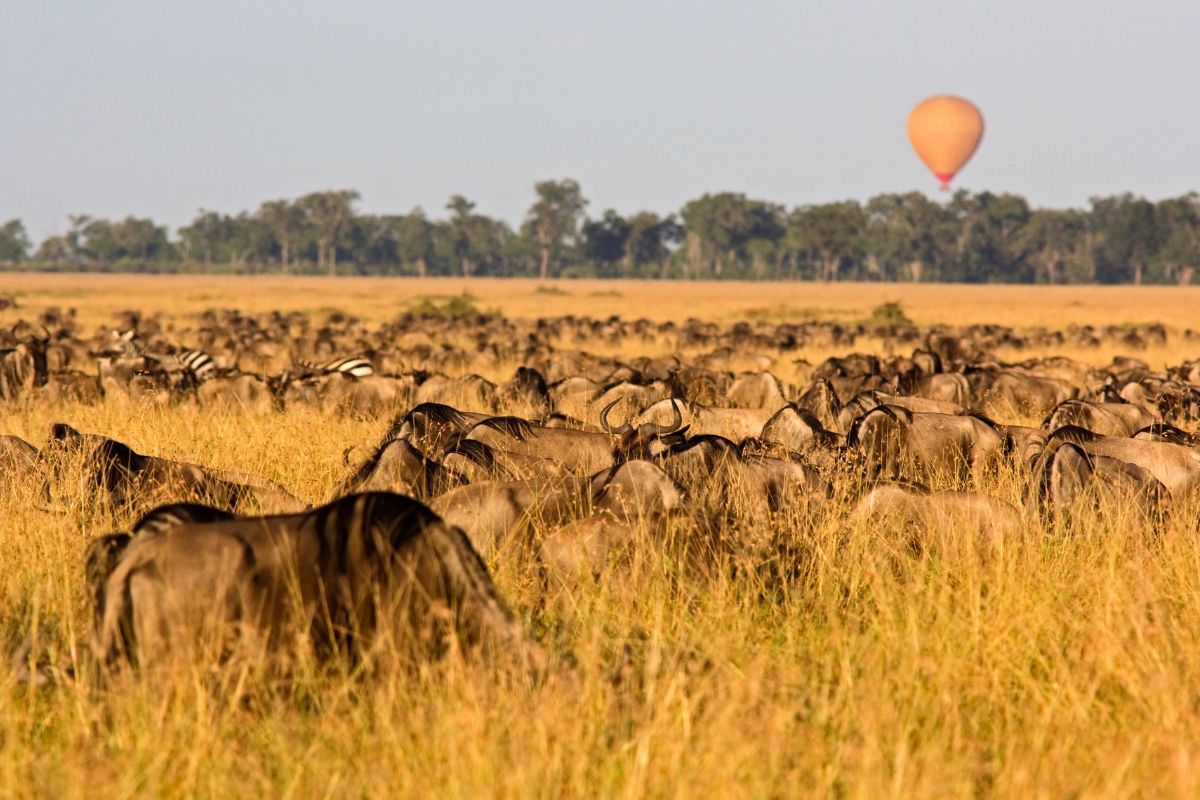
- Serengeti hot air balloon rides
This creates a more complete and memorable East African adventure.
Ultimately, the most successful safari experiences come from a combination of timing, flexibility, and expert local planning. With the right preparation, your Wildebeest Migration Safari becomes more than a trip — it becomes a once-in-a-lifetime journey.
Frequently Asked Questions About a Wildebeest Migration Safari
Planning a Wildebeest Migration Safari often comes with important questions, and these answers will help you prepare for a smooth, memorable, and well-informed safari experience.
1. What is a Wildebeest Migration Safari?
A Wildebeest Migration Safari is a specialized wildlife experience focused on witnessing the annual movement of over 1.5 million wildebeests, accompanied by zebras and gazelles, across the Serengeti in Tanzania and the Maasai Mara in Kenya. This continuous journey is driven by rainfall and grazing patterns, making it one of the most remarkable natural events in the world.
2. When is the best time for a Wildebeest Migration Safari?
The best time depends on the specific stage of the migration you want to experience:
- January to March: calving season in Southern Serengeti
- April to May: green season with herd movement north
- June to July: Grumeti River crossings in Western Serengeti
- July to September: Mara River crossings in Northern Serengeti and Maasai Mara
- October to December: return to Southern Serengeti
For many travelers, July to September is ideal for a Wildebeest Migration Safari due to the dramatic river crossings.
3. Where does a Wildebeest Migration Safari take place?
A Wildebeest Migration Safari takes place across two key destinations:
- Serengeti National Park, Tanzania
- Maasai Mara National Reserve, Kenya
The migration follows a circular route between these regions throughout the year, making both destinations essential depending on timing.
4. How many days should I book for a Wildebeest Migration Safari?
The ideal duration depends on your travel goals:
- 3–4 days: short safari focused on one location
- 5–7 days: balanced experience with better wildlife coverage
- 8–10 days: extended safari following the migration route
A longer Wildebeest Migration Safari increases your chances of witnessing key highlights such as river crossings and predator activity.
5. What wildlife can I see during a Wildebeest Migration Safari?
In addition to wildebeests, you can expect to see a wide range of wildlife:
- lions, leopards, and cheetahs
- elephants and buffalo
- zebras and gazelles
- crocodiles during river crossings
- hyenas and other scavengers
A Wildebeest Migration Safari is particularly known for intense predator-prey interactions, especially during calving season and river crossings.
6. Is a Wildebeest Migration Safari suitable for first-time travelers?
Yes, a Wildebeest Migration Safari is highly suitable for first-time safari travelers. It offers a complete African safari experience, combining:
- large-scale wildlife movement
- iconic landscapes
- frequent predator sightings
- excellent photography opportunities
It is often considered one of the best introductions to East African safaris.
7. What should I pack for a Wildebeest Migration Safari?
Packing for a Wildebeest Migration Safari should focus on comfort and practicality. Essential items include:
- neutral-colored clothing for game drives
- binoculars and a camera with a zoom lens
- sunscreen and a hat for sun protection
- comfortable walking shoes
- a light jacket for early mornings
Proper packing ensures a smooth and enjoyable safari experience.
8. Can I combine a Wildebeest Migration Safari with Zanzibar?
Yes, combining a Wildebeest Migration Safari with a Zanzibar beach holiday is a popular option.
This combination allows you to:
- experience wildlife in Tanzania or Kenya
- relax on white sandy beaches
- enjoy a balanced travel itinerary
It is one of the most recommended safari extensions.
9. How early should I book a Wildebeest Migration Safari?
It is advisable to book your Wildebeest Migration Safari at least 3 to 6 months in advance, especially for peak travel periods such as July through September.
Early booking ensures:
- access to prime lodges
- better pricing options
- availability in key migration locations
10. How do I book a Wildebeest Migration Safari with Sandy Shores Africa Safaris?
Booking your Wildebeest Migration Safari is simple and tailored to your preferences:
- choose your preferred travel dates
- select your safari duration
- receive a customized itinerary
- confirm your booking
- prepare for your safari experience
With Sandy Shores Africa Safaris, every detail of your Wildebeest Migration Safari is professionally handled, ensuring a seamless, well-organized, and unforgettable journey.
Book Your Wildebeest Migration Safari with Sandy Shores Africa Safaris
Experience the awe-inspiring Wildebeest Migration Safari across Kenya and Tanzania with Sandy Shores Africa Safaris. Our expert guides, customized itineraries, and exclusive wildlife encounters ensure every moment is unforgettable. From dramatic river crossings to predator-filled plains, we craft a seamless and immersive safari adventure. Book your Wildebeest Migration Safari today and witness one of the world’s greatest natural spectacles in comfort and style.


