Booking an African safari is not a routine travel decision—it is a high-value investment that demands precision, timing, and expert insight. In destinations such as Maasai Mara and Serengeti, where global demand peaks during iconic wildlife events like the Great Migration, availability is secured by those who plan early and strategically. As international interest in luxury, experience-driven travel accelerates into 2026, competition for prime lodges, guides, and optimal itineraries is intensifying. This guide delivers a refined, expert-led framework on how to book an African safari with clarity, confidence, and measurable value.
1. Book Early to Secure High-Demand Safari Seasons
One of the most important principles in understanding how to book an African safari is recognizing that timing directly determines both experience quality and cost efficiency. Safari ecosystems operate within tightly defined seasonal cycles, where wildlife movement, vegetation density, and water availability shape visibility and game-viewing outcomes.
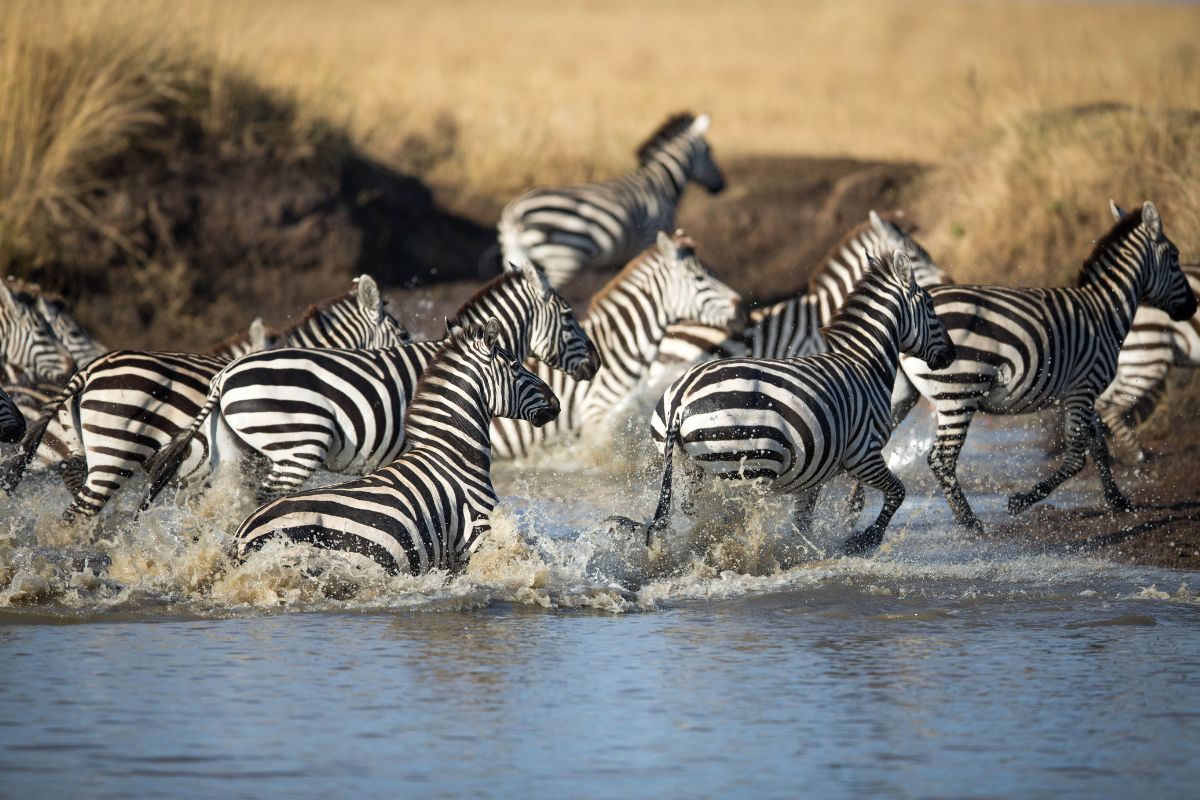
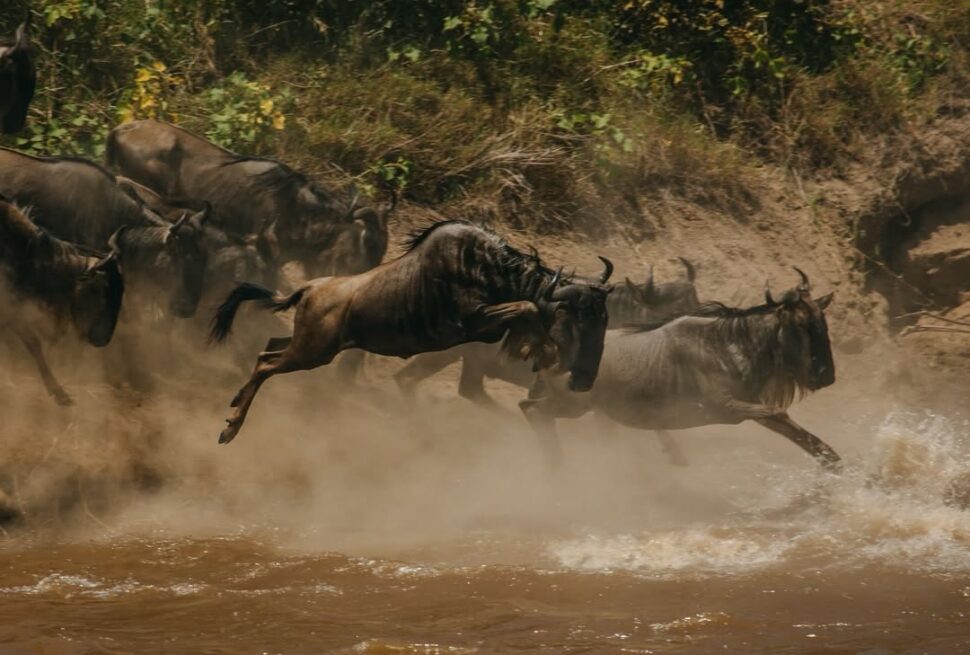
To illustrate, peak safari seasons—particularly in Maasai Mara and Serengeti—coincide with the world-renowned Great Migration. During this period, demand surges globally, driven by travelers seeking high-density wildlife encounters and dramatic river crossings. As a result, premium lodges, strategically located camps, and experienced guides are often fully booked well in advance.
Moreover, late booking does not only limit accommodation options—it compromises the overall safari experience. Properties in less optimal locations may still be available, but they often lack proximity to key wildlife corridors, reducing sighting frequency and diminishing the value of the trip.
Optimal Booking Timeline
To secure both value and experience quality, align your booking window with your travel goals:
6–12 months in advance: Essential for peak migration periods and high-end luxury lodges with prime positioning
4–6 months in advance: Ideal for shoulder seasons, offering a balance between pricing, availability, and crowd levels
2–3 months or less: High risk of limited inventory, restricted itinerary flexibility, and inflated last-minute pricing
In addition, early booking allows for better itinerary customization, including preferred lodge selection, optimal routing between parks, and access to top-tier guides. This level of control is particularly important for travelers seeking a tailored, high-end safari experience.
Ultimately, timing is not a secondary consideration—it is a core strategic lever. Mastering this aspect of how to book an African safari ensures superior access, stronger value, and a significantly enhanced wildlife experience.
2. Select Destinations Based on Experience Architecture, Not Popularity
When evaluating how to book an African safari, many travellers default to well-known names without first defining the experience they want to achieve. However, Africa’s leading safari regions are not interchangeable—each ecosystem delivers a distinct combination of wildlife density, terrain, and encounter style.
Therefore, a strategic approach begins with experience architecture: aligning your destination with your specific travel intent—whether that is high-action wildlife viewing, photographic landscapes, or exclusive, low-density luxury immersion.
Destination Experience Breakdown
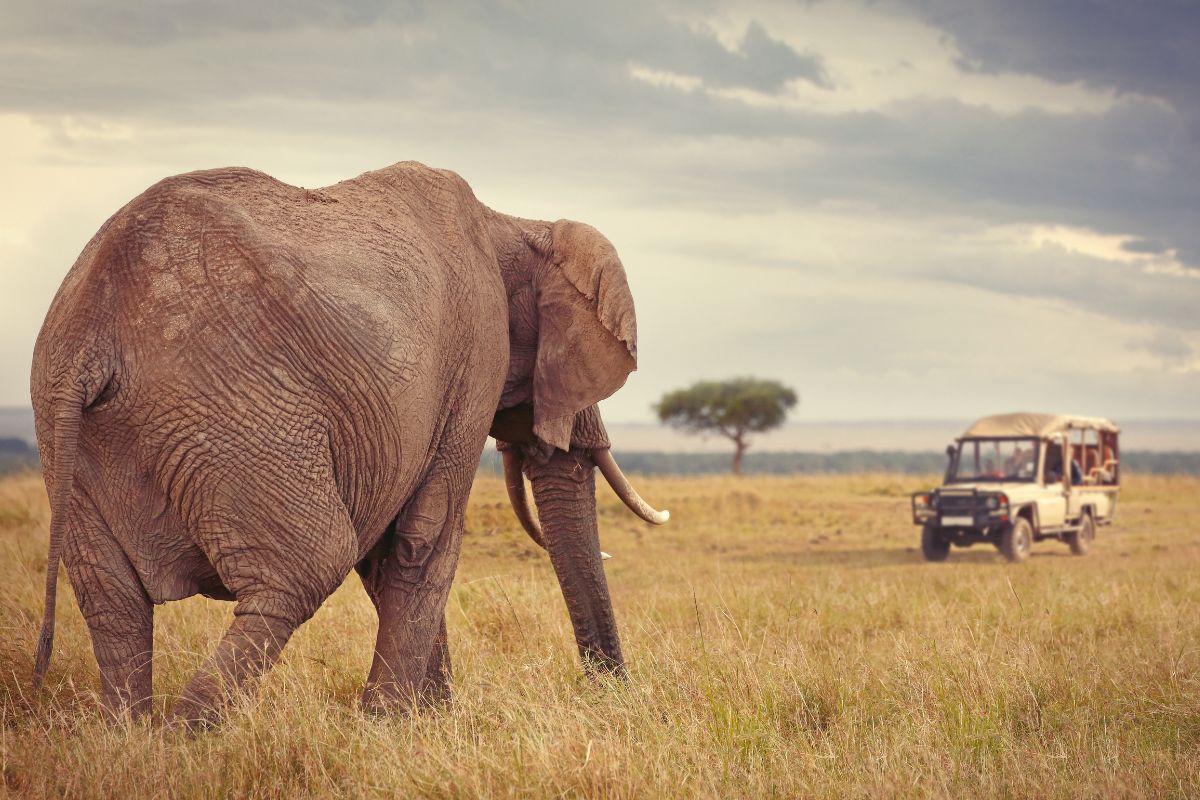
Tourists on a guided safari game drive in Maasai Mara National Reserve
Maasai Mara (Kenya): Renowned for concentrated wildlife populations, reliable Big Five sightings, and front-row access to the Great Migration river crossings. Ideal for travellers seeking high-impact, action-driven safaris.
Serengeti (Tanzania): Offers vast, uninterrupted plains and a more dispersed migration flow, creating a deeper sense of scale and wilderness immersion. Best suited for extended, cinematic safari experiences.
Lake Nakuru (Kenya): A compact yet ecologically rich park known for rhino conservation, diverse birdlife, and efficient game drives within shorter timeframes. Suitable for structured itineraries and combined safari circuits.
Bwindi Impenetrable Forest (Uganda): A specialized destination focused on gorilla trekking and primate encounters, delivering a rare, intimate wildlife experience that differs entirely from traditional savannah safaris.
Beyond individual destinations, combining multiple ecosystems into a single itinerary significantly elevates the overall safari value. For instance, integrating savannah game drives with forest-based primate tracking creates a multi-dimensional wildlife portfolio, enhancing both diversity and depth of experience.
In conclusion, destination selection should never be driven by popularity alone. It should be a deliberate, outcome-based decision—engineered to deliver the specific safari experience you intend to achieve.
3. Understand Safari Pricing Dynamics Before You Commit
A sophisticated understanding of how to book an African safari must include pricing intelligence. Safari costs are not static—they are structured around demand cycles, operational logistics, and the level of exclusivity embedded within the experience. Without this clarity, travellers often compare packages superficially, overlooking critical value differentiators that directly impact the quality of the safari.
Key Pricing Drivers
Seasonal demand fluctuations: Peak periods such as the Great Migration significantly increase rates, while off-peak seasons offer cost efficiencies with different wildlife dynamics
Accommodation category: From budget camps to ultra-luxury lodges, pricing reflects service level, location advantage, and exclusivity
Park entry fees and conservation levies: Fixed regulatory costs that vary by destination, including reserves like Maasai Mara
Transport mode: Road safaris are more cost-effective, whereas fly-in safaris offer speed, comfort, and access to remote, premium locations
Safari configuration: Private safaris command higher pricing due to exclusivity and flexibility, while group departures distribute costs
Beyond these visible factors, true value is often embedded in the details. Inclusions such as professionally guided game drives, extended park access hours, and lodge positioning near active wildlife corridors can significantly elevate the overall experience without always being obvious in initial pricing.
Consequently, a strategic approach to how to book an African safari requires moving beyond headline figures. A detailed, itemized cost breakdown is essential to assess value accurately, ensuring that every component of the safari contributes to a high-quality, well-executed experience.
4. Choose a Reputable Safari Operator with Proven Field Expertise
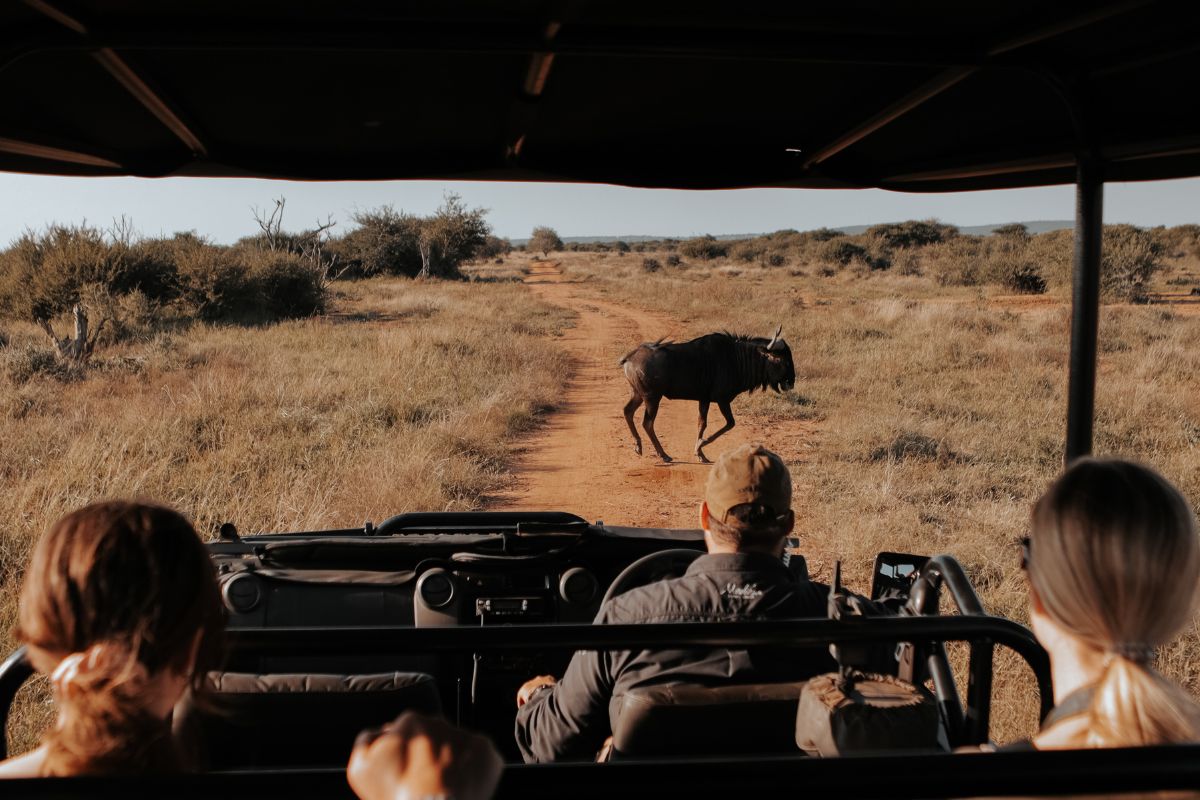
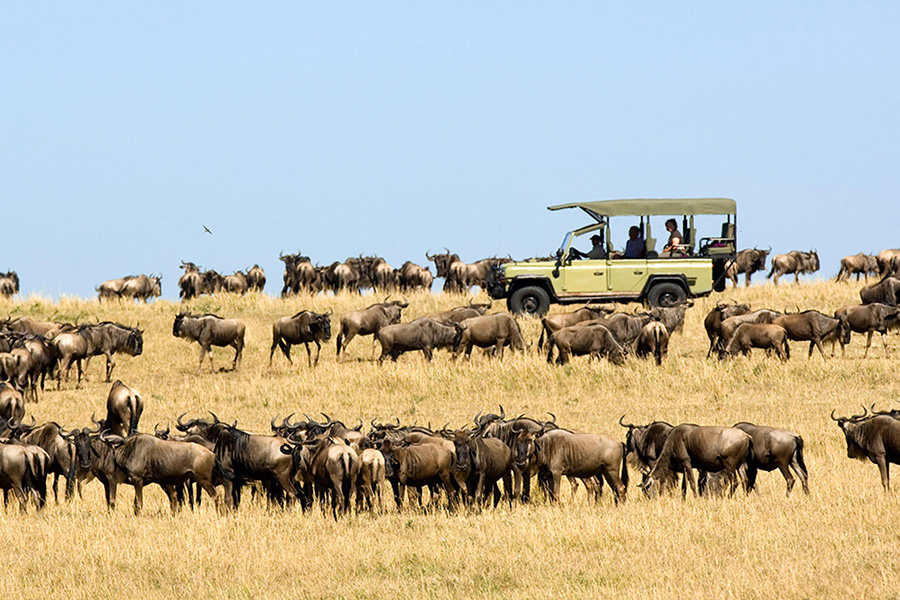
Wildebeest crossing in front of a safari vehicle during a guided African safari experience
Another critical dimension in understanding how to book an African safari is operator selection. This decision is not administrative—it is foundational. The safari operator you choose directly shapes the safety, coordination, and overall execution quality of your safari, from airport transfers to game drive precision in reserves such as Maasai Mara and Serengeti.
Unlike conventional travel, safaris operate in dynamic, unpredictable environments. Wildlife movement, weather conditions, and terrain variability require real-time decision-making and deep field knowledge. Consequently, working with an experienced operator ensures that your itinerary remains adaptive, efficient, and aligned with the best possible wildlife encounters.
Evaluation Criteria for Safari Operators
Proven track record: Demonstrated experience within specific safari destinations and ecosystems
Verified client reviews: Consistent positive feedback and repeat clientele indicate reliability and service quality
Licensing and compliance: Proper registration with tourism authorities and adherence to conservation regulations
Guide expertise: Skilled guides with deep knowledge of animal behaviour, tracking, and park navigation
Transparency: Clear itinerary structures, detailed inclusions, and no hidden costs
Beyond logistics, the most effective operators function as experience architects. They design itineraries around wildlife movement patterns, seasonal ecosystem changes, and optimal game-viewing windows—rather than fixed, rigid schedules.
As a result, the operator becomes a strategic partner in your safari journey, ensuring that every element—from lodge selection to daily routing—works cohesively to deliver a high-quality, immersive experience.
5. Align Your Itinerary with Wildlife Behaviour and Seasonal Patterns
A sophisticated approach to how to book an African safari extends beyond destinations and operators—it requires alignment with wildlife behaviour. Safari success is not random; it is driven by ecological patterns that influence where and when animals can be seen.
Wildlife visibility across East Africa is shaped by rainfall cycles, grazing patterns, predator-prey dynamics, and migration movements such as the Great Migration. Understanding these variables allows travellers to position themselves strategically for higher-quality sightings.
Key Behavioural Considerations
Seasonal migration routes between ecosystems like the Serengeti and Maasai Mara
Dry season concentration of wildlife around water sources
Increased predator activity during early morning and late evening hours
Breeding and calving seasons that attract heightened predator-prey interaction
In addition, itinerary design should prioritize operational efficiency and ecological timing. Early morning and late afternoon game drives consistently deliver the highest wildlife activity, while lodge proximity to key corridors reduces transit time and maximizes time in active zones.
Ultimately, aligning your itinerary with these natural patterns transforms the safari from a passive experience into a strategically optimized wildlife encounter—significantly increasing both sighting frequency and overall value.
Book Your African Safari with Sandy Shores Africa Safaris
By applying these five expert principles on how to book an African safari, you position yourself to secure a seamless, high-value experience—and with Sandy Shores Africa Safaris, that process becomes structured, precise, and results-driven. Our team translates these strategies into tailored itineraries across premier destinations such as Maasai Mara and Serengeti, ensuring optimal timing, lodge selection, and wildlife access aligned with your expectations. Beyond planning, we provide deeper guidance on how to book an African safari effectively, eliminating uncertainty while maximizing both experience quality and cost efficiency. You benefit from expert-led execution, transparent pricing, and itineraries engineered around real wildlife movement patterns. Start your 2026 safari planning with Sandy Shores Africa Safaris and transform insight into a world-class African journey.
Sandy Shores Africa Safaris is a premier East African travel and tour company specializing in unforgettable safari adventures, coastal escapes, and tailor-made travel experiences across Kenya and beyond. With a deep passion for wildlife, culture, and destination excellence, the brand is dedicated to creating seamless journeys that combine adventure, comfort, and authentic African experiences.
From iconic game drives in the Masai Mara and Amboseli to breathtaking oceanfront getaways along the Kenyan coast, Sandy Shores Africa Safaris curates travel experiences designed to suit solo travelers, couples, families, and groups. Every itinerary is carefully planned to deliver memorable moments, personalized service, and exceptional value.
Driven by a commitment to professionalism, attention to detail, and customer satisfaction, Sandy Shores Africa Safaris continues to help travelers explore the beauty of Africa with confidence and ease.